

Tech Insights & Articles

Dive Into Our Exciting New Blogs!

Look no further than our skilled team, We only hire the best talent in the Industry. We offer flexible hiring models to meet your specific needs, whether you need a dedicated developer on a full-time, part-time, or hourly basis.

How to Find the Best SEO Company in Ahmedabad for Your Business Growth
Recent Posts
2026-06-02 07:30• 7 min read

How to Find the Best SEO Company in Ahmedabad for Your Business Growth

In today’s digital-first marketplace, search visibility can make or break your growth trajectory. Whether you’re a startup, SME, or enterprise, ranking on Google is essential for attracting qualified leads, building trust, and driving revenue. But with dozens of agencies claiming top results, how do you choose the Best SEO Company in Ahmedabad for your specific goals?This guide breaks down a practical, results-driven framework to help you evaluate agencies, avoid common pitfalls, and partner with a team that delivers measurable business outcomes—not just vanity metrics.Why SEO Matters for Business GrowthSearch Engine Optimization (SEO) is much more than adding keywords to a website. It is a long-term digital marketing strategy that combines technical optimization, high-quality content, user experience, and authority building to improve a website's visibility on search engines. A well-executed SEO strategy helps businesses attract qualified visitors who are actively searching for their products or services, leading to sustainable organic growth.The benefits of SEO extend beyond rankings. It helps generate consistent organic traffic, improves conversion rates, builds brand credibility, and delivers long-term return on investment compared to many paid marketing channels.A professional SEO agency in Ahmedabad focuses on aligning SEO efforts with business objectives, ensuring that increased visibility translates into measurable outcomes such as leads, sales, and customer acquisition.What Defines the Best SEO Company in Ahmedabad?Not all agencies are created equal. The Best SEO Company in Ahmedabad stands out by combining strategy, execution, and transparency.One of the most important factors to consider is the agency’s track record. A reliable SEO company should be able to demonstrate measurable success through case studies, client testimonials, and performance reports. Whether it's achieving ranking improvements for competitive keywords, increasing organic traffic, or generating qualified leads, past results provide valuable insight into an agency's capabilities and expertise.Additionally, leading SEO companies adopt a full-funnel approach to optimization. This ensures that businesses attract the right audience and effectively guide them toward taking action.Finally, ethical SEO practices play a crucial role in sustainable growth. Reputable agencies follow Google's guidelines by focusing on high-quality content, natural link-building strategies, and technically sound website optimization. By avoiding black-hat techniques and prioritizing long-term results, they help businesses build lasting search visibility and online authority.Essential SEO Services to Look ForWhen evaluating an SEO agency, ensure they provide comprehensive services such as:Technical SEOSite speed optimizationCore Web Vitals improvementsCrawlability and indexation fixesStructured data (schema)On-Page SEOKeyword mapping and intent alignmentTitle tags, meta descriptions, headersInternal linking and content optimizationOff-Page SEOHigh-quality backlinksDigital PR and outreachBrand mentions and citationsContent StrategyTopic clusters and pillar pagesLong-form blog contentConversion-focused landing pagesWhy Local Expertise in Ahmedabad MattersChoosing a local partner offers a strategic edge:Better understanding of regional markets and search behavior.Easier collaboration and faster communication.Stronger local SEO execution (Google Business Profile, citations).A reputed IT company in Ahmedabad can combine SEO with web, mobile, and cloud capabilities—ensuring your digital ecosystem is optimized end-to-end.Red Flags to Avoid When Hiring an SEO AgencyChoosing the wrong SEO agency can result in wasted time, budget, and missed growth opportunities. One major red flag is an agency that guarantees #1 rankings on Google. Since search engine algorithms constantly change, no legitimate SEO provider can promise specific ranking positions. Similarly, agencies that provide vague reports or fail to share clear performance metrics may lack transparency and accountability in their SEO efforts.Another warning sign is the use of generic SEO packages that don't align with your business goals. Effective SEO requires a customized strategy based on your industry, competition, and target audience.How Infilon Helps You Scale with SEOInfilon Technologies brings a performance-driven approach to SEO, backed by strong engineering capabilities. As a leading Custom software development company in India, the team blends technical expertise with data-led marketing to deliver sustainable growth.What You Get with Infilon TechnologiesIn-depth SEO audits and tailored roadmapsConversion-focused content strategiesHigh-quality backlink acquisitionTechnical SEO aligned with modern web standardsTransparent reporting with actionable insightsWhether you’re launching a new website or scaling an existing one, Infilon Technologies ensures your SEO strategy aligns with your business objectives.Final ThoughtsFinding the right SEO partner is a strategic decision that directly impacts your growth. The Best SEO Company in Ahmedabad will not only improve rankings but also drive meaningful business results—qualified traffic, higher conversions, and long-term brand authority.By focusing on proven expertise, transparent processes, and a technology-backed approach, you can confidently choose a partner that delivers real ROI.If you’re ready to grow your online presence, consider collaborating with Infilon Technologies which is a trusted name that combines SEO excellence with robust development capabilities to build scalable, high-performance digital solutions.
Top Benefits of AI-Powered Field Service Management SoftwareRecent
2026-04-20•7 min read

Top Benefits of AI-Powered Field Service Management Software

Field operations have changed dramatically over the last few years. Businesses that once depended on manual scheduling, spreadsheets, and constant phone coordination are now moving toward intelligent automation systems that simplify everyday operations. Whether it’s service businesses, logistics companies, sales teams, or maintenance providers, organizations are realizing that operational speed and visibility directly impact customer satisfaction and revenue growth.This shift is driving the rapid adoption of AI-powered field service management software across industries.Companies no longer want disconnected systems that create delays and confusion between managers, technicians, and customers. They need platforms that provide real-time visibility, smarter task management, workforce tracking, and operational automation from one centralized ecosystem. That’s exactly where AI-driven field management platforms are delivering measurable business value.Solutions like Onfield AI are helping businesses modernize how they manage field teams, customer requests, and operational workflows while improving productivity at scale.Why Traditional Field Management No Longer WorksManaging field employees manually becomes difficult as businesses grow. Teams become larger, service requests increase, and operational coordination becomes more complex. Businesses often struggle with:Delayed service assignmentsPoor workforce visibilityCommunication gapsMissed customer updatesManual reporting issuesInefficient route planningOver time, these operational inefficiencies reduce productivity and negatively affect customer experience.Modern businesses require systems that not only organize field operations but also improve decision-making through automation and intelligent insights. This is why many companies are investing in Field service management software India solutions that combine workforce management, analytics, and automation within a single platform.AI Is Transforming Field OperationsArtificial intelligence is no longer limited to chatbots or automation tools. In field operations, AI is helping businesses make faster and smarter operational decisions every day.Instead of manually assigning tasks, AI can automatically allocate jobs based on employee availability, location, urgency, and skill set. It can identify operational delays before they happen and recommend optimized scheduling routes for better productivity.This changes how businesses operate at scale.For growing companies, AI-driven automation removes repetitive administrative tasks and allows teams to focus more on service quality and customer engagement rather than operational coordination.This is one of the biggest reasons businesses are actively adopting Field Force Management Software India platforms for workforce operations.Smarter Scheduling Improves ProductivityOne of the most valuable benefits of AI-powered field management systems is intelligent scheduling.Traditional scheduling methods often create overlaps, missed appointments, and inefficient task allocation. AI simplifies this by analyzing workforce availability, technician proximity, and service priority automatically.This improves:Response timeWorkforce productivityDaily task completionOperational efficiencyBusinesses can handle more service requests without increasing operational complexity.For industries like HVAC services, maintenance operations, telecom, and logistics, this level of optimization significantly improves operational performance.Real-Time Visibility Creates Better ControlOperational visibility is one of the biggest challenges for businesses managing remote teams.Without proper tracking systems, managers struggle to monitor field activities, employee productivity, service progress, and customer status updates. AI-powered workforce platforms solve this problem through centralized dashboards and live operational tracking.Businesses can monitor:Field employee locationsService progressAttendance statusCustomer task updatesTeam productivity metricsThis real-time visibility helps management teams make quicker operational decisions while improving workforce accountability.Customer Experience Improves AutomaticallyCustomer expectations have changed. People expect faster service responses, accurate communication, and transparent updates throughout the service process.AI-powered field service systems improve customer experience by automating communication workflows. Customers receive:Real-time service updatesAutomated notificationsTechnician arrival statusDigital service reportsThis reduces confusion while creating a more professional service experience.Businesses using platforms like Onfield AI often improve both customer retention and operational efficiency simultaneously because communication becomes faster and more consistent.AI Helps Businesses Scale EfficientlyAs companies grow, operational management becomes more difficult. Expanding field teams, larger customer bases, and increasing service requests create new operational pressure.AI-powered platforms help businesses scale without creating operational chaos.Modern Enterprise Field Service Management systems simplify large-scale operations by automating repetitive processes, centralizing data, and improving cross-team coordination. Businesses can manage larger teams without dramatically increasing manual oversight.This scalability becomes extremely valuable for organizations operating across multiple cities or regions.Connected Sales and Service OperationsMany businesses manage field sales teams separately from service operations. This often creates communication gaps and disconnected reporting structures.Modern Sales Force Automation software helps unify sales operations with workforce management systems. Businesses can track field executives, monitor lead activities, automate follow-ups, and improve reporting visibility from a single ecosystem.This creates better collaboration between departments while improving operational consistency across the organization.The Role of Custom Software in Field OperationsEvery business operates differently. Some companies need workforce tracking. Others require inventory management, route optimization, service automation, or customer communication systems.This is why many organizations partner with a Custom Software Development company India to build tailored field management solutions aligned with their operational workflows.Companies like Infilon help businesses create scalable digital platforms that support real operational requirements rather than forcing teams to adjust to rigid software systems.Custom-built AI platforms provide better flexibility, smoother integrations, and long-term operational adaptability.The Future of AI-Powered Workforce ManagementAI-driven workforce management is still evolving rapidly. Businesses are now moving toward predictive analytics, automated decision-making, and intelligent workflow optimization.Future-ready field management systems will increasingly include:Predictive service schedulingAI-driven operational forecastingIoT-connected workforce monitoringAutomated customer assistanceAdvanced performance analyticsBusinesses adopting AI-powered field operations today are positioning themselves for stronger operational agility and long-term competitive advantage.ConclusionAI-powered field service management software is no longer a luxury for modern businesses. It has become an essential operational tool for organizations looking to improve productivity, streamline coordination, and deliver better customer experiences.From intelligent scheduling and real-time tracking to automation and analytics, these systems are helping businesses operate faster and smarter in highly competitive markets.As digital transformation continues accelerating across industries, businesses investing in intelligent workforce management solutions will be better equipped to scale operations, improve efficiency, and meet evolving customer expectations.

Read article
IoT Development: Key Trends and Applications for 2026Recent
2026-05-15•7 min read

IoT Development: Key Trends and Applications for 2026

The Internet of Things (IoT) has rapidly evolved from a futuristic concept into a critical driver of digital transformation across industries. In 2026, IoT is enabling businesses to connect devices, collect real-time data, and automate operations like never before. From smart homes and industrial automation to healthcare and logistics, IoT Development is reshaping how organizations operate and deliver value.With advancements in AI, cloud computing, and edge technologies, IoT solutions are becoming smarter, faster, and more scalable. In this blog, we explore the key trends shaping IoT in 2026 and the real-world applications that are transforming industries.What is IoT Development?IoT Development refers to the process of building applications and systems that connect physical devices to the internet, enabling them to collect, exchange, and analyze data. These systems use sensors, connectivity, and software to automate tasks and improve efficiency.A reliable custom software development company in India helps businesses design and implement IoT solutions tailored to their specific needs, ensuring seamless integration with existing systems.Why IoT is Important in 2026The importance of IoT continues to grow as businesses seek real-time insights, automation, and improved operational efficiency. Key reasons include:Real-time data monitoring for faster decision-makingAutomation of processes to reduce manual effortEnhanced customer experiences through smart solutionsCost savings through optimized resource managementOrganizations partnering with experts like Infilon Technologies can unlock the full potential of IoT by implementing scalable and secure solutions.Key IoT Development Trends in 20261. Edge Computing IntegrationEdge computing is revolutionizing IoT by processing data closer to the source instead of relying solely on centralized cloud systems. This reduces latency, improves performance, and enables real-time decision-making.2. AI-Powered IoT SolutionsArtificial Intelligence is enhancing IoT systems by enabling predictive analytics, anomaly detection, and intelligent automation. AI-driven IoT applications can predict equipment failures, optimize operations, and improve overall efficiency.3. 5G ConnectivityThe rollout of 5G networks is significantly improving IoT capabilities by providing faster data transmission, lower latency, and better device connectivity. This is especially important for applications like autonomous vehicles and smart cities.4. Digital TwinsDigital twins are virtual representations of physical assets. IoT sensors collect real-time data from physical devices, which is then used to simulate and analyze performance in a virtual environment.5. Enhanced IoT SecurityWith the increasing number of connected devices, security remains a top priority. Advanced encryption, authentication mechanisms, and secure communication protocols are being implemented to protect IoT ecosystems.6. IoT and SustainabilityIoT is playing a crucial role in promoting sustainability by optimizing energy consumption, reducing waste, and enabling smart resource management.Applications of IoT Across IndustriesSmart HomesIoT enables automation of lighting, heating, security systems, and appliances, providing convenience and energy efficiency for homeowners.HealthcareIoT devices monitor patient health in real time, enabling remote diagnostics and improving patient care. Wearable devices and connected medical equipment are transforming healthcare delivery.Manufacturing (Industry 4.0)IoT is at the core of smart manufacturing, enabling predictive maintenance, real-time monitoring, and automation of production processes.RetailRetailers use IoT for inventory management, customer analytics, and personalized shopping experiences.Logistics and TransportationIoT helps track shipments, optimize routes, and improve supply chain efficiency, reducing costs and delivery times.AgricultureSmart farming solutions use IoT sensors to monitor soil conditions, weather patterns, and crop health, improving agricultural productivity.Benefits of IoT Development for BusinessesImproved EfficiencyIoT automates processes and reduces manual intervention, increasing productivity.Better Decision-MakingReal-time data insights enable faster and more informed decisions.Cost OptimizationEfficient resource management reduces operational costs.Enhanced Customer ExperienceIoT-driven solutions provide personalized and seamless user experiences.Companies working with Infilon Technologies benefit from innovative IoT solutions designed to deliver measurable business outcomes.Challenges in IoT DevelopmentDespite its advantages, IoT development comes with challenges such as:Data security and privacy concernsIntegration with legacy systemsHigh implementation costsComplexity of managing large IoT networksPartnering with a trusted IoT Development company ensures that these challenges are addressed effectively.Why Choose the Right Development PartnerSelecting the right development partner is crucial for successful IoT implementation. Businesses should look for:Technical expertise in IoT technologiesExperience across industriesStrong focus on security and scalabilityAbility to provide end-to-end solutionsA reliable IT company in Ahmedabad like Infilon Technologies offers comprehensive IoT solutions tailored to business requirements.As a leading software development company in ahmedabad, Infilon combines advanced technology with industry expertise to deliver high-quality IoT applications.The Future of IoT DevelopmentThe future of IoT lies in deeper integration with AI, blockchain, and cloud computing. Emerging trends such as autonomous systems, smart cities, and intelligent infrastructure will further drive IoT adoption.Businesses investing in IoT Development today will be better positioned to leverage these innovations and stay ahead in the competitive digital landscape.For businesses managing large-scale IoT systems, understanding intelligent IT operations is crucial. Read our guide on What is AIOps? A Complete Beginner’s Guide to learn more.ConclusionIoT development is transforming industries by enabling smarter operations, real-time insights, and enhanced user experiences. As technology continues to evolve, businesses must embrace IoT to remain competitive and innovative.By leveraging advanced technologies and partnering with experienced providers like Infilon Technologies, organizations can build scalable and secure IoT solutions tailored to their needs.Whether you’re looking to automate processes, improve efficiency, or create new business opportunities, IoT is the key to unlocking future growth.

Read article
Fintech App Development: Trends and Security Tips for 2026Recent
2026-04-20•7 min read

Fintech App Development: Trends and Security Tips for 2026

The financial technology (Fintech) industry continues to evolve rapidly, driven by digital innovation, changing customer expectations, and the need for secure and efficient financial services. In 2026, businesses are increasingly investing in Fintech App Development to offer seamless banking, payment, lending, and investment experiences.From mobile banking apps to AI-powered financial platforms, fintech solutions are transforming how people manage money. However, with this growth comes the critical need for robust security measures. In this blog, we explore the latest fintech trends and essential security tips shaping the future of digital finance.Understanding Fintech App DevelopmentFintech App Development involves creating software applications that provide financial services such as payments, lending, wealth management, insurance, and blockchain-based solutions. These apps are designed to enhance accessibility, improve efficiency, and deliver personalized user experiences.A reliable Fintech App Development company helps businesses design and deploy scalable, secure, and innovative fintech solutions tailored to modern user demands.Top Fintech App Development Trends in 20261. AI-Powered Financial SolutionsArtificial Intelligence is transforming fintech by enabling predictive analytics, fraud detection, and personalized financial recommendations. AI-driven chatbots and virtual assistants improve customer support and user engagement.Companies like Infilon Technologies are leveraging AI to build intelligent fintech solutions that deliver real-time insights and automation.2. Blockchain and Decentralized Finance (DeFi)Blockchain technology continues to disrupt traditional financial systems by providing transparency, security, and decentralization. DeFi platforms allow users to access financial services without intermediaries, reducing costs and increasing efficiency.3. Embedded FinanceEmbedded finance integrates financial services directly into non-financial platforms such as e-commerce apps, ride-sharing services, and social media platforms. This trend enhances user convenience and expands revenue opportunities for businesses.4. Open Banking APIsOpen banking allows third-party developers to access financial data through APIs, enabling the creation of innovative financial services. This promotes collaboration between banks and fintech companies.5. Contactless Payments and Digital WalletsThe demand for contactless payments and digital wallets is growing rapidly. Mobile payment apps offer faster, safer, and more convenient transaction experiences.6. RegTech (Regulatory Technology)RegTech solutions help financial institutions comply with regulatory requirements efficiently. These tools automate compliance processes and reduce operational risks.Importance of Security in Fintech ApplicationsSecurity is a top priority in fintech applications due to the sensitive nature of financial data. A single breach can lead to significant financial loss and reputational damage.Partnering with a trusted custom software development company in India ensures that security is embedded into every stage of the development process.Essential Security Tips for Fintech App Development1. Data EncryptionEncrypting data both at rest and in transit ensures that sensitive information remains protected from unauthorized access.2. Multi-Factor Authentication (MFA)MFA adds an extra layer of security by requiring users to verify their identity using multiple authentication methods.3. Secure APIsAPIs are a critical component of fintech applications. Ensuring API security through authentication and monitoring helps prevent unauthorized access.4. Regular Security AuditsConducting regular vulnerability assessments and penetration testing helps identify and address potential security threats.5. Compliance with RegulationsFintech apps must comply with regulations such as GDPR, PCI DSS, and local financial laws to ensure data protection and legal compliance.6. Fraud Detection SystemsAI-based fraud detection systems monitor transactions in real time and identify suspicious activities, reducing the risk of fraud.Benefits of Investing in Fintech App DevelopmentImproved Customer ExperienceFintech apps provide seamless, user-friendly interfaces that enhance customer satisfaction.Faster TransactionsDigital platforms enable instant payments and quick financial processing.Cost EfficiencyAutomation reduces operational costs and improves efficiency.ScalabilityFintech solutions can easily scale to accommodate growing user bases and evolving business needs.Why Choose Infilon Technologies for Fintech SolutionsInfilon Technologies is a leading provider of innovative software solutions, offering expertise in fintech application development. With a strong focus on security, scalability, and performance, the company delivers tailored fintech solutions that meet modern business requirements.As a trusted custom software development company in India, Infilon combines technical expertise with industry knowledge to build reliable and future-ready fintech applications.Global Fintech Development LandscapeThe fintech industry is expanding globally, with businesses increasingly partnering with a reliable software development company USA to ensure high-quality, secure, and scalable solutions.Global trends indicate a growing demand for AI-driven financial platforms, blockchain-based applications, and secure digital payment systems.Challenges in Fintech App DevelopmentDespite its advantages, fintech development comes with challenges such as:Regulatory compliance complexitiesData security concernsIntegration with legacy systemsHigh competition in the fintech marketWorking with an experienced Fintech App Development company helps businesses overcome these challenges and deliver successful solutions.The Future of Fintech App DevelopmentThe future of fintech lies in innovation, security, and user-centric design. Emerging technologies like AI, blockchain, and cloud computing will continue to shape the industry.As digital transformation accelerates, businesses investing in Fintech App Development will gain a competitive advantage by offering smarter, faster, and more secure financial services.ConclusionFintech app development is revolutionizing the financial industry, offering new opportunities for businesses to innovate and grow. However, success in fintech requires a strong focus on both technology and security.By staying updated with the latest trends and implementing robust security measures, businesses can build reliable fintech solutions that meet user expectations and regulatory standards.Partnering with experts like Infilon Technologies ensures the development of secure, scalable, and future-ready fintech applications tailored to your business goals.

Read article
AI/ML Integration in Custom Software Development: A 2026 GuideRecent
2026-03-20•7 min read

AI/ML Integration in Custom Software Development: A 2026 Guide

Artificial Intelligence (AI) and Machine Learning (ML) are no longer emerging technologies—they are essential drivers of digital transformation. In 2026, businesses are rapidly integrating AI/ML capabilities into their applications to automate processes, enhance decision-making, and deliver personalized user experiences.The fusion of AI with custom software solutions is redefining how organizations operate. From predictive analytics to intelligent automation, AI in Custom Software is enabling smarter, faster, and more scalable systems across industries.In this guide, we explore how AI/ML integration is transforming custom software development and why businesses should embrace this shift.What is AI/ML Integration in Custom Software Development?AI/ML integration refers to embedding intelligent algorithms and data-driven models into software applications to enable systems to learn, predict, and adapt. Unlike traditional software that follows predefined rules, AI-powered systems continuously improve based on data inputs.A reliable custom software development company in India helps businesses design and implement AI-driven applications tailored to their operational needs and industry requirements.Why AI/ML is Essential in 20261. Data-Driven Decision MakingBusinesses generate massive volumes of data daily. AI and ML models process this data to deliver actionable insights, helping organizations make informed decisions in real time.2. Automation and EfficiencyAI automates repetitive tasks, reducing manual effort and improving operational efficiency. This leads to cost savings and faster workflows.3. Personalization at ScaleFrom recommendation engines to targeted marketing, AI enables businesses to deliver highly personalized experiences to users.4. Competitive AdvantageCompanies leveraging AI in Custom Software gain a significant edge by offering smarter, more responsive products.Key Applications of AI/ML in Custom Software1. Predictive AnalyticsAI models analyze historical data to forecast trends, customer behavior, and business outcomes. This is widely used in finance, healthcare, and retail industries.2. Intelligent ChatbotsAI-powered chatbots enhance customer support by providing instant, accurate responses and improving user engagement.3. Image and Speech RecognitionAI enables applications to process images, videos, and voice data, enabling use cases such as facial recognition and voice assistants.4. Process AutomationAI-driven automation streamlines workflows, reduces errors, and increases productivity across business operations.Benefits of AI Integration in Custom Software DevelopmentImproved EfficiencyAI systems automate processes and optimize workflows, leading to higher efficiency.Enhanced User ExperienceAI enables intuitive interfaces and personalized interactions, improving user satisfaction.ScalabilityAI-powered applications adapt to increasing data and user demands, ensuring long-term scalability.Cost OptimizationAutomation reduces operational costs while improving output quality.Businesses partnering with an experienced AI Development company in Ahmedabad can unlock these benefits effectively and implement scalable AI solutions.Steps to Integrate AI/ML into Custom SoftwareStep 1: Define Business ObjectivesIdentify the specific problems AI can solve—whether it's improving customer experience, automating processes, or enhancing analytics.Step 2: Data Collection and PreparationAI models require high-quality data. Proper data collection, cleaning, and structuring are essential for accurate outcomes.Step 3: Choose the Right AI ModelsSelect appropriate machine learning models based on the use case, such as supervised learning, unsupervised learning, or deep learning.Step 4: Development and IntegrationIntegrate AI models into existing or new software systems. This requires expertise in both software engineering and AI technologies.Step 5: Continuous Monitoring and OptimizationAI systems evolve over time, requiring ongoing monitoring, training, and optimization to maintain accuracy and performance.Challenges in AI/ML IntegrationWhile AI offers numerous advantages, businesses must address challenges such as:Data privacy and security concernsHigh initial investmentComplexity of implementationNeed for skilled professionalsWorking with a trusted AI Development company helps overcome these challenges and ensures successful implementation.Role of AI Development ServicesProfessional AI development services play a crucial role in delivering high-quality AI-powered solutions. These services include:AI strategy consultingModel development and deploymentIntegration with existing systemsPerformance optimization and maintenanceOrganizations partnering with experts like Infilon Technologies can accelerate AI adoption and achieve faster results.Why Choose Infilon Technologies for AI-Powered SolutionsInfilon Technologies is a leading provider of innovative software solutions, specializing in AI-driven custom development. With expertise in modern frameworks and intelligent systems, the company delivers scalable and future-ready applications tailored to business needs.As a trusted custom software development company in India, Infilon Technologies focuses on building secure, efficient, and high-performance solutions that align with industry standards.Global Trends in AI-Powered Software DevelopmentAI adoption is growing rapidly worldwide, especially among enterprises collaborating with a reliable software development company USA to build enterprise-grade solutions.Key trends include:AI-powered automation across industriesIntegration of generative AI in applicationsIncreased focus on ethical AI practicesExpansion of AI in cloud-based platformsThese trends highlight the importance of integrating AI into modern software systems.Future of AI in Custom Software DevelopmentThe future of custom software lies in intelligent, adaptive systems. As AI continues to evolve, we can expect:Autonomous decision-making systemsReal-time predictive analyticsAdvanced personalization capabilitiesSeamless human-AI collaborationBusinesses investing in AI-driven development today will be better positioned for tomorrow’s digital landscape.ConclusionAI and ML are transforming the way software is designed, developed, and deployed. Integrating AI into custom applications enables businesses to automate processes, enhance decision-making, and deliver superior user experiences.The adoption of AI in Custom Software is no longer optional—it’s a necessity for staying competitive in 2026 and beyond.

Read article

Explore Topics

Categories

Showing 103 articles

How to Find the Best SEO Company in Ahmedabad for Your Business Growth
2026-06-02•7 min read

How to Find the Best SEO Company in Ahmedabad for Your Business Growth

In today’s digital-first marketplace, search visibility can make or break your growth trajectory. Whether you’re a startup, SME, or enterprise, ranking on Google is essential for attracting qualified leads, building trust, and driving revenue. But with dozens of agencies claiming top results, how do you choose the Best SEO Company in Ahmedabad for your specific goals?This guide breaks down a practical, results-driven framework to help you evaluate agencies, avoid common pitfalls, and partner with a team that delivers measurable business outcomes—not just vanity metrics.Why SEO Matters for Business GrowthSearch Engine Optimization (SEO) is much more than adding keywords to a website. It is a long-term digital marketing strategy that combines technical optimization, high-quality content, user experience, and authority building to improve a website's visibility on search engines. A well-executed SEO strategy helps businesses attract qualified visitors who are actively searching for their products or services, leading to sustainable organic growth.The benefits of SEO extend beyond rankings. It helps generate consistent organic traffic, improves conversion rates, builds brand credibility, and delivers long-term return on investment compared to many paid marketing channels.A professional SEO agency in Ahmedabad focuses on aligning SEO efforts with business objectives, ensuring that increased visibility translates into measurable outcomes such as leads, sales, and customer acquisition.What Defines the Best SEO Company in Ahmedabad?Not all agencies are created equal. The Best SEO Company in Ahmedabad stands out by combining strategy, execution, and transparency.One of the most important factors to consider is the agency’s track record. A reliable SEO company should be able to demonstrate measurable success through case studies, client testimonials, and performance reports. Whether it's achieving ranking improvements for competitive keywords, increasing organic traffic, or generating qualified leads, past results provide valuable insight into an agency's capabilities and expertise.Additionally, leading SEO companies adopt a full-funnel approach to optimization. This ensures that businesses attract the right audience and effectively guide them toward taking action.Finally, ethical SEO practices play a crucial role in sustainable growth. Reputable agencies follow Google's guidelines by focusing on high-quality content, natural link-building strategies, and technically sound website optimization. By avoiding black-hat techniques and prioritizing long-term results, they help businesses build lasting search visibility and online authority.Essential SEO Services to Look ForWhen evaluating an SEO agency, ensure they provide comprehensive services such as:Technical SEOSite speed optimizationCore Web Vitals improvementsCrawlability and indexation fixesStructured data (schema)On-Page SEOKeyword mapping and intent alignmentTitle tags, meta descriptions, headersInternal linking and content optimizationOff-Page SEOHigh-quality backlinksDigital PR and outreachBrand mentions and citationsContent StrategyTopic clusters and pillar pagesLong-form blog contentConversion-focused landing pagesWhy Local Expertise in Ahmedabad MattersChoosing a local partner offers a strategic edge:Better understanding of regional markets and search behavior.Easier collaboration and faster communication.Stronger local SEO execution (Google Business Profile, citations).A reputed IT company in Ahmedabad can combine SEO with web, mobile, and cloud capabilities—ensuring your digital ecosystem is optimized end-to-end.Red Flags to Avoid When Hiring an SEO AgencyChoosing the wrong SEO agency can result in wasted time, budget, and missed growth opportunities. One major red flag is an agency that guarantees #1 rankings on Google. Since search engine algorithms constantly change, no legitimate SEO provider can promise specific ranking positions. Similarly, agencies that provide vague reports or fail to share clear performance metrics may lack transparency and accountability in their SEO efforts.Another warning sign is the use of generic SEO packages that don't align with your business goals. Effective SEO requires a customized strategy based on your industry, competition, and target audience.How Infilon Helps You Scale with SEOInfilon Technologies brings a performance-driven approach to SEO, backed by strong engineering capabilities. As a leading Custom software development company in India, the team blends technical expertise with data-led marketing to deliver sustainable growth.What You Get with Infilon TechnologiesIn-depth SEO audits and tailored roadmapsConversion-focused content strategiesHigh-quality backlink acquisitionTechnical SEO aligned with modern web standardsTransparent reporting with actionable insightsWhether you’re launching a new website or scaling an existing one, Infilon Technologies ensures your SEO strategy aligns with your business objectives.Final ThoughtsFinding the right SEO partner is a strategic decision that directly impacts your growth. The Best SEO Company in Ahmedabad will not only improve rankings but also drive meaningful business results—qualified traffic, higher conversions, and long-term brand authority.By focusing on proven expertise, transparent processes, and a technology-backed approach, you can confidently choose a partner that delivers real ROI.If you’re ready to grow your online presence, consider collaborating with Infilon Technologies which is a trusted name that combines SEO excellence with robust development capabilities to build scalable, high-performance digital solutions.
Top Benefits of AI-Powered Field Service Management Software
2026-04-20•7 min read

Top Benefits of AI-Powered Field Service Management Software

Field operations have changed dramatically over the last few years. Businesses that once depended on manual scheduling, spreadsheets, and constant phone coordination are now moving toward intelligent automation systems that simplify everyday operations. Whether it’s service businesses, logistics companies, sales teams, or maintenance providers, organizations are realizing that operational speed and visibility directly impact customer satisfaction and revenue growth.This shift is driving the rapid adoption of AI-powered field service management software across industries.Companies no longer want disconnected systems that create delays and confusion between managers, technicians, and customers. They need platforms that provide real-time visibility, smarter task management, workforce tracking, and operational automation from one centralized ecosystem. That’s exactly where AI-driven field management platforms are delivering measurable business value.Solutions like Onfield AI are helping businesses modernize how they manage field teams, customer requests, and operational workflows while improving productivity at scale.Why Traditional Field Management No Longer WorksManaging field employees manually becomes difficult as businesses grow. Teams become larger, service requests increase, and operational coordination becomes more complex. Businesses often struggle with:Delayed service assignmentsPoor workforce visibilityCommunication gapsMissed customer updatesManual reporting issuesInefficient route planningOver time, these operational inefficiencies reduce productivity and negatively affect customer experience.Modern businesses require systems that not only organize field operations but also improve decision-making through automation and intelligent insights. This is why many companies are investing in Field service management software India solutions that combine workforce management, analytics, and automation within a single platform.AI Is Transforming Field OperationsArtificial intelligence is no longer limited to chatbots or automation tools. In field operations, AI is helping businesses make faster and smarter operational decisions every day.Instead of manually assigning tasks, AI can automatically allocate jobs based on employee availability, location, urgency, and skill set. It can identify operational delays before they happen and recommend optimized scheduling routes for better productivity.This changes how businesses operate at scale.For growing companies, AI-driven automation removes repetitive administrative tasks and allows teams to focus more on service quality and customer engagement rather than operational coordination.This is one of the biggest reasons businesses are actively adopting Field Force Management Software India platforms for workforce operations.Smarter Scheduling Improves ProductivityOne of the most valuable benefits of AI-powered field management systems is intelligent scheduling.Traditional scheduling methods often create overlaps, missed appointments, and inefficient task allocation. AI simplifies this by analyzing workforce availability, technician proximity, and service priority automatically.This improves:Response timeWorkforce productivityDaily task completionOperational efficiencyBusinesses can handle more service requests without increasing operational complexity.For industries like HVAC services, maintenance operations, telecom, and logistics, this level of optimization significantly improves operational performance.Real-Time Visibility Creates Better ControlOperational visibility is one of the biggest challenges for businesses managing remote teams.Without proper tracking systems, managers struggle to monitor field activities, employee productivity, service progress, and customer status updates. AI-powered workforce platforms solve this problem through centralized dashboards and live operational tracking.Businesses can monitor:Field employee locationsService progressAttendance statusCustomer task updatesTeam productivity metricsThis real-time visibility helps management teams make quicker operational decisions while improving workforce accountability.Customer Experience Improves AutomaticallyCustomer expectations have changed. People expect faster service responses, accurate communication, and transparent updates throughout the service process.AI-powered field service systems improve customer experience by automating communication workflows. Customers receive:Real-time service updatesAutomated notificationsTechnician arrival statusDigital service reportsThis reduces confusion while creating a more professional service experience.Businesses using platforms like Onfield AI often improve both customer retention and operational efficiency simultaneously because communication becomes faster and more consistent.AI Helps Businesses Scale EfficientlyAs companies grow, operational management becomes more difficult. Expanding field teams, larger customer bases, and increasing service requests create new operational pressure.AI-powered platforms help businesses scale without creating operational chaos.Modern Enterprise Field Service Management systems simplify large-scale operations by automating repetitive processes, centralizing data, and improving cross-team coordination. Businesses can manage larger teams without dramatically increasing manual oversight.This scalability becomes extremely valuable for organizations operating across multiple cities or regions.Connected Sales and Service OperationsMany businesses manage field sales teams separately from service operations. This often creates communication gaps and disconnected reporting structures.Modern Sales Force Automation software helps unify sales operations with workforce management systems. Businesses can track field executives, monitor lead activities, automate follow-ups, and improve reporting visibility from a single ecosystem.This creates better collaboration between departments while improving operational consistency across the organization.The Role of Custom Software in Field OperationsEvery business operates differently. Some companies need workforce tracking. Others require inventory management, route optimization, service automation, or customer communication systems.This is why many organizations partner with a Custom Software Development company India to build tailored field management solutions aligned with their operational workflows.Companies like Infilon help businesses create scalable digital platforms that support real operational requirements rather than forcing teams to adjust to rigid software systems.Custom-built AI platforms provide better flexibility, smoother integrations, and long-term operational adaptability.The Future of AI-Powered Workforce ManagementAI-driven workforce management is still evolving rapidly. Businesses are now moving toward predictive analytics, automated decision-making, and intelligent workflow optimization.Future-ready field management systems will increasingly include:Predictive service schedulingAI-driven operational forecastingIoT-connected workforce monitoringAutomated customer assistanceAdvanced performance analyticsBusinesses adopting AI-powered field operations today are positioning themselves for stronger operational agility and long-term competitive advantage.ConclusionAI-powered field service management software is no longer a luxury for modern businesses. It has become an essential operational tool for organizations looking to improve productivity, streamline coordination, and deliver better customer experiences.From intelligent scheduling and real-time tracking to automation and analytics, these systems are helping businesses operate faster and smarter in highly competitive markets.As digital transformation continues accelerating across industries, businesses investing in intelligent workforce management solutions will be better equipped to scale operations, improve efficiency, and meet evolving customer expectations.

IoT Development: Key Trends and Applications for 2026
2026-05-15•7 min read

IoT Development: Key Trends and Applications for 2026

The Internet of Things (IoT) has rapidly evolved from a futuristic concept into a critical driver of digital transformation across industries. In 2026, IoT is enabling businesses to connect devices, collect real-time data, and automate operations like never before. From smart homes and industrial automation to healthcare and logistics, IoT Development is reshaping how organizations operate and deliver value.With advancements in AI, cloud computing, and edge technologies, IoT solutions are becoming smarter, faster, and more scalable. In this blog, we explore the key trends shaping IoT in 2026 and the real-world applications that are transforming industries.What is IoT Development?IoT Development refers to the process of building applications and systems that connect physical devices to the internet, enabling them to collect, exchange, and analyze data. These systems use sensors, connectivity, and software to automate tasks and improve efficiency.A reliable custom software development company in India helps businesses design and implement IoT solutions tailored to their specific needs, ensuring seamless integration with existing systems.Why IoT is Important in 2026The importance of IoT continues to grow as businesses seek real-time insights, automation, and improved operational efficiency. Key reasons include:Real-time data monitoring for faster decision-makingAutomation of processes to reduce manual effortEnhanced customer experiences through smart solutionsCost savings through optimized resource managementOrganizations partnering with experts like Infilon Technologies can unlock the full potential of IoT by implementing scalable and secure solutions.Key IoT Development Trends in 20261. Edge Computing IntegrationEdge computing is revolutionizing IoT by processing data closer to the source instead of relying solely on centralized cloud systems. This reduces latency, improves performance, and enables real-time decision-making.2. AI-Powered IoT SolutionsArtificial Intelligence is enhancing IoT systems by enabling predictive analytics, anomaly detection, and intelligent automation. AI-driven IoT applications can predict equipment failures, optimize operations, and improve overall efficiency.3. 5G ConnectivityThe rollout of 5G networks is significantly improving IoT capabilities by providing faster data transmission, lower latency, and better device connectivity. This is especially important for applications like autonomous vehicles and smart cities.4. Digital TwinsDigital twins are virtual representations of physical assets. IoT sensors collect real-time data from physical devices, which is then used to simulate and analyze performance in a virtual environment.5. Enhanced IoT SecurityWith the increasing number of connected devices, security remains a top priority. Advanced encryption, authentication mechanisms, and secure communication protocols are being implemented to protect IoT ecosystems.6. IoT and SustainabilityIoT is playing a crucial role in promoting sustainability by optimizing energy consumption, reducing waste, and enabling smart resource management.Applications of IoT Across IndustriesSmart HomesIoT enables automation of lighting, heating, security systems, and appliances, providing convenience and energy efficiency for homeowners.HealthcareIoT devices monitor patient health in real time, enabling remote diagnostics and improving patient care. Wearable devices and connected medical equipment are transforming healthcare delivery.Manufacturing (Industry 4.0)IoT is at the core of smart manufacturing, enabling predictive maintenance, real-time monitoring, and automation of production processes.RetailRetailers use IoT for inventory management, customer analytics, and personalized shopping experiences.Logistics and TransportationIoT helps track shipments, optimize routes, and improve supply chain efficiency, reducing costs and delivery times.AgricultureSmart farming solutions use IoT sensors to monitor soil conditions, weather patterns, and crop health, improving agricultural productivity.Benefits of IoT Development for BusinessesImproved EfficiencyIoT automates processes and reduces manual intervention, increasing productivity.Better Decision-MakingReal-time data insights enable faster and more informed decisions.Cost OptimizationEfficient resource management reduces operational costs.Enhanced Customer ExperienceIoT-driven solutions provide personalized and seamless user experiences.Companies working with Infilon Technologies benefit from innovative IoT solutions designed to deliver measurable business outcomes.Challenges in IoT DevelopmentDespite its advantages, IoT development comes with challenges such as:Data security and privacy concernsIntegration with legacy systemsHigh implementation costsComplexity of managing large IoT networksPartnering with a trusted IoT Development company ensures that these challenges are addressed effectively.Why Choose the Right Development PartnerSelecting the right development partner is crucial for successful IoT implementation. Businesses should look for:Technical expertise in IoT technologiesExperience across industriesStrong focus on security and scalabilityAbility to provide end-to-end solutionsA reliable IT company in Ahmedabad like Infilon Technologies offers comprehensive IoT solutions tailored to business requirements.As a leading software development company in ahmedabad, Infilon combines advanced technology with industry expertise to deliver high-quality IoT applications.The Future of IoT DevelopmentThe future of IoT lies in deeper integration with AI, blockchain, and cloud computing. Emerging trends such as autonomous systems, smart cities, and intelligent infrastructure will further drive IoT adoption.Businesses investing in IoT Development today will be better positioned to leverage these innovations and stay ahead in the competitive digital landscape.For businesses managing large-scale IoT systems, understanding intelligent IT operations is crucial. Read our guide on What is AIOps? A Complete Beginner’s Guide to learn more.ConclusionIoT development is transforming industries by enabling smarter operations, real-time insights, and enhanced user experiences. As technology continues to evolve, businesses must embrace IoT to remain competitive and innovative.By leveraging advanced technologies and partnering with experienced providers like Infilon Technologies, organizations can build scalable and secure IoT solutions tailored to their needs.Whether you’re looking to automate processes, improve efficiency, or create new business opportunities, IoT is the key to unlocking future growth.

Fintech App Development: Trends and Security Tips for 2026
2026-04-20•7 min read

Fintech App Development: Trends and Security Tips for 2026

The financial technology (Fintech) industry continues to evolve rapidly, driven by digital innovation, changing customer expectations, and the need for secure and efficient financial services. In 2026, businesses are increasingly investing in Fintech App Development to offer seamless banking, payment, lending, and investment experiences.From mobile banking apps to AI-powered financial platforms, fintech solutions are transforming how people manage money. However, with this growth comes the critical need for robust security measures. In this blog, we explore the latest fintech trends and essential security tips shaping the future of digital finance.Understanding Fintech App DevelopmentFintech App Development involves creating software applications that provide financial services such as payments, lending, wealth management, insurance, and blockchain-based solutions. These apps are designed to enhance accessibility, improve efficiency, and deliver personalized user experiences.A reliable Fintech App Development company helps businesses design and deploy scalable, secure, and innovative fintech solutions tailored to modern user demands.Top Fintech App Development Trends in 20261. AI-Powered Financial SolutionsArtificial Intelligence is transforming fintech by enabling predictive analytics, fraud detection, and personalized financial recommendations. AI-driven chatbots and virtual assistants improve customer support and user engagement.Companies like Infilon Technologies are leveraging AI to build intelligent fintech solutions that deliver real-time insights and automation.2. Blockchain and Decentralized Finance (DeFi)Blockchain technology continues to disrupt traditional financial systems by providing transparency, security, and decentralization. DeFi platforms allow users to access financial services without intermediaries, reducing costs and increasing efficiency.3. Embedded FinanceEmbedded finance integrates financial services directly into non-financial platforms such as e-commerce apps, ride-sharing services, and social media platforms. This trend enhances user convenience and expands revenue opportunities for businesses.4. Open Banking APIsOpen banking allows third-party developers to access financial data through APIs, enabling the creation of innovative financial services. This promotes collaboration between banks and fintech companies.5. Contactless Payments and Digital WalletsThe demand for contactless payments and digital wallets is growing rapidly. Mobile payment apps offer faster, safer, and more convenient transaction experiences.6. RegTech (Regulatory Technology)RegTech solutions help financial institutions comply with regulatory requirements efficiently. These tools automate compliance processes and reduce operational risks.Importance of Security in Fintech ApplicationsSecurity is a top priority in fintech applications due to the sensitive nature of financial data. A single breach can lead to significant financial loss and reputational damage.Partnering with a trusted custom software development company in India ensures that security is embedded into every stage of the development process.Essential Security Tips for Fintech App Development1. Data EncryptionEncrypting data both at rest and in transit ensures that sensitive information remains protected from unauthorized access.2. Multi-Factor Authentication (MFA)MFA adds an extra layer of security by requiring users to verify their identity using multiple authentication methods.3. Secure APIsAPIs are a critical component of fintech applications. Ensuring API security through authentication and monitoring helps prevent unauthorized access.4. Regular Security AuditsConducting regular vulnerability assessments and penetration testing helps identify and address potential security threats.5. Compliance with RegulationsFintech apps must comply with regulations such as GDPR, PCI DSS, and local financial laws to ensure data protection and legal compliance.6. Fraud Detection SystemsAI-based fraud detection systems monitor transactions in real time and identify suspicious activities, reducing the risk of fraud.Benefits of Investing in Fintech App DevelopmentImproved Customer ExperienceFintech apps provide seamless, user-friendly interfaces that enhance customer satisfaction.Faster TransactionsDigital platforms enable instant payments and quick financial processing.Cost EfficiencyAutomation reduces operational costs and improves efficiency.ScalabilityFintech solutions can easily scale to accommodate growing user bases and evolving business needs.Why Choose Infilon Technologies for Fintech SolutionsInfilon Technologies is a leading provider of innovative software solutions, offering expertise in fintech application development. With a strong focus on security, scalability, and performance, the company delivers tailored fintech solutions that meet modern business requirements.As a trusted custom software development company in India, Infilon combines technical expertise with industry knowledge to build reliable and future-ready fintech applications.Global Fintech Development LandscapeThe fintech industry is expanding globally, with businesses increasingly partnering with a reliable software development company USA to ensure high-quality, secure, and scalable solutions.Global trends indicate a growing demand for AI-driven financial platforms, blockchain-based applications, and secure digital payment systems.Challenges in Fintech App DevelopmentDespite its advantages, fintech development comes with challenges such as:Regulatory compliance complexitiesData security concernsIntegration with legacy systemsHigh competition in the fintech marketWorking with an experienced Fintech App Development company helps businesses overcome these challenges and deliver successful solutions.The Future of Fintech App DevelopmentThe future of fintech lies in innovation, security, and user-centric design. Emerging technologies like AI, blockchain, and cloud computing will continue to shape the industry.As digital transformation accelerates, businesses investing in Fintech App Development will gain a competitive advantage by offering smarter, faster, and more secure financial services.ConclusionFintech app development is revolutionizing the financial industry, offering new opportunities for businesses to innovate and grow. However, success in fintech requires a strong focus on both technology and security.By staying updated with the latest trends and implementing robust security measures, businesses can build reliable fintech solutions that meet user expectations and regulatory standards.Partnering with experts like Infilon Technologies ensures the development of secure, scalable, and future-ready fintech applications tailored to your business goals.

AI/ML Integration in Custom Software Development: A 2026 Guide
2026-03-20•7 min read

AI/ML Integration in Custom Software Development: A 2026 Guide

Artificial Intelligence (AI) and Machine Learning (ML) are no longer emerging technologies—they are essential drivers of digital transformation. In 2026, businesses are rapidly integrating AI/ML capabilities into their applications to automate processes, enhance decision-making, and deliver personalized user experiences.The fusion of AI with custom software solutions is redefining how organizations operate. From predictive analytics to intelligent automation, AI in Custom Software is enabling smarter, faster, and more scalable systems across industries.In this guide, we explore how AI/ML integration is transforming custom software development and why businesses should embrace this shift.What is AI/ML Integration in Custom Software Development?AI/ML integration refers to embedding intelligent algorithms and data-driven models into software applications to enable systems to learn, predict, and adapt. Unlike traditional software that follows predefined rules, AI-powered systems continuously improve based on data inputs.A reliable custom software development company in India helps businesses design and implement AI-driven applications tailored to their operational needs and industry requirements.Why AI/ML is Essential in 20261. Data-Driven Decision MakingBusinesses generate massive volumes of data daily. AI and ML models process this data to deliver actionable insights, helping organizations make informed decisions in real time.2. Automation and EfficiencyAI automates repetitive tasks, reducing manual effort and improving operational efficiency. This leads to cost savings and faster workflows.3. Personalization at ScaleFrom recommendation engines to targeted marketing, AI enables businesses to deliver highly personalized experiences to users.4. Competitive AdvantageCompanies leveraging AI in Custom Software gain a significant edge by offering smarter, more responsive products.Key Applications of AI/ML in Custom Software1. Predictive AnalyticsAI models analyze historical data to forecast trends, customer behavior, and business outcomes. This is widely used in finance, healthcare, and retail industries.2. Intelligent ChatbotsAI-powered chatbots enhance customer support by providing instant, accurate responses and improving user engagement.3. Image and Speech RecognitionAI enables applications to process images, videos, and voice data, enabling use cases such as facial recognition and voice assistants.4. Process AutomationAI-driven automation streamlines workflows, reduces errors, and increases productivity across business operations.Benefits of AI Integration in Custom Software DevelopmentImproved EfficiencyAI systems automate processes and optimize workflows, leading to higher efficiency.Enhanced User ExperienceAI enables intuitive interfaces and personalized interactions, improving user satisfaction.ScalabilityAI-powered applications adapt to increasing data and user demands, ensuring long-term scalability.Cost OptimizationAutomation reduces operational costs while improving output quality.Businesses partnering with an experienced AI Development company in Ahmedabad can unlock these benefits effectively and implement scalable AI solutions.Steps to Integrate AI/ML into Custom SoftwareStep 1: Define Business ObjectivesIdentify the specific problems AI can solve—whether it's improving customer experience, automating processes, or enhancing analytics.Step 2: Data Collection and PreparationAI models require high-quality data. Proper data collection, cleaning, and structuring are essential for accurate outcomes.Step 3: Choose the Right AI ModelsSelect appropriate machine learning models based on the use case, such as supervised learning, unsupervised learning, or deep learning.Step 4: Development and IntegrationIntegrate AI models into existing or new software systems. This requires expertise in both software engineering and AI technologies.Step 5: Continuous Monitoring and OptimizationAI systems evolve over time, requiring ongoing monitoring, training, and optimization to maintain accuracy and performance.Challenges in AI/ML IntegrationWhile AI offers numerous advantages, businesses must address challenges such as:Data privacy and security concernsHigh initial investmentComplexity of implementationNeed for skilled professionalsWorking with a trusted AI Development company helps overcome these challenges and ensures successful implementation.Role of AI Development ServicesProfessional AI development services play a crucial role in delivering high-quality AI-powered solutions. These services include:AI strategy consultingModel development and deploymentIntegration with existing systemsPerformance optimization and maintenanceOrganizations partnering with experts like Infilon Technologies can accelerate AI adoption and achieve faster results.Why Choose Infilon Technologies for AI-Powered SolutionsInfilon Technologies is a leading provider of innovative software solutions, specializing in AI-driven custom development. With expertise in modern frameworks and intelligent systems, the company delivers scalable and future-ready applications tailored to business needs.As a trusted custom software development company in India, Infilon Technologies focuses on building secure, efficient, and high-performance solutions that align with industry standards.Global Trends in AI-Powered Software DevelopmentAI adoption is growing rapidly worldwide, especially among enterprises collaborating with a reliable software development company USA to build enterprise-grade solutions.Key trends include:AI-powered automation across industriesIntegration of generative AI in applicationsIncreased focus on ethical AI practicesExpansion of AI in cloud-based platformsThese trends highlight the importance of integrating AI into modern software systems.Future of AI in Custom Software DevelopmentThe future of custom software lies in intelligent, adaptive systems. As AI continues to evolve, we can expect:Autonomous decision-making systemsReal-time predictive analyticsAdvanced personalization capabilitiesSeamless human-AI collaborationBusinesses investing in AI-driven development today will be better positioned for tomorrow’s digital landscape.ConclusionAI and ML are transforming the way software is designed, developed, and deployed. Integrating AI into custom applications enables businesses to automate processes, enhance decision-making, and deliver superior user experiences.The adoption of AI in Custom Software is no longer optional—it’s a necessity for staying competitive in 2026 and beyond.

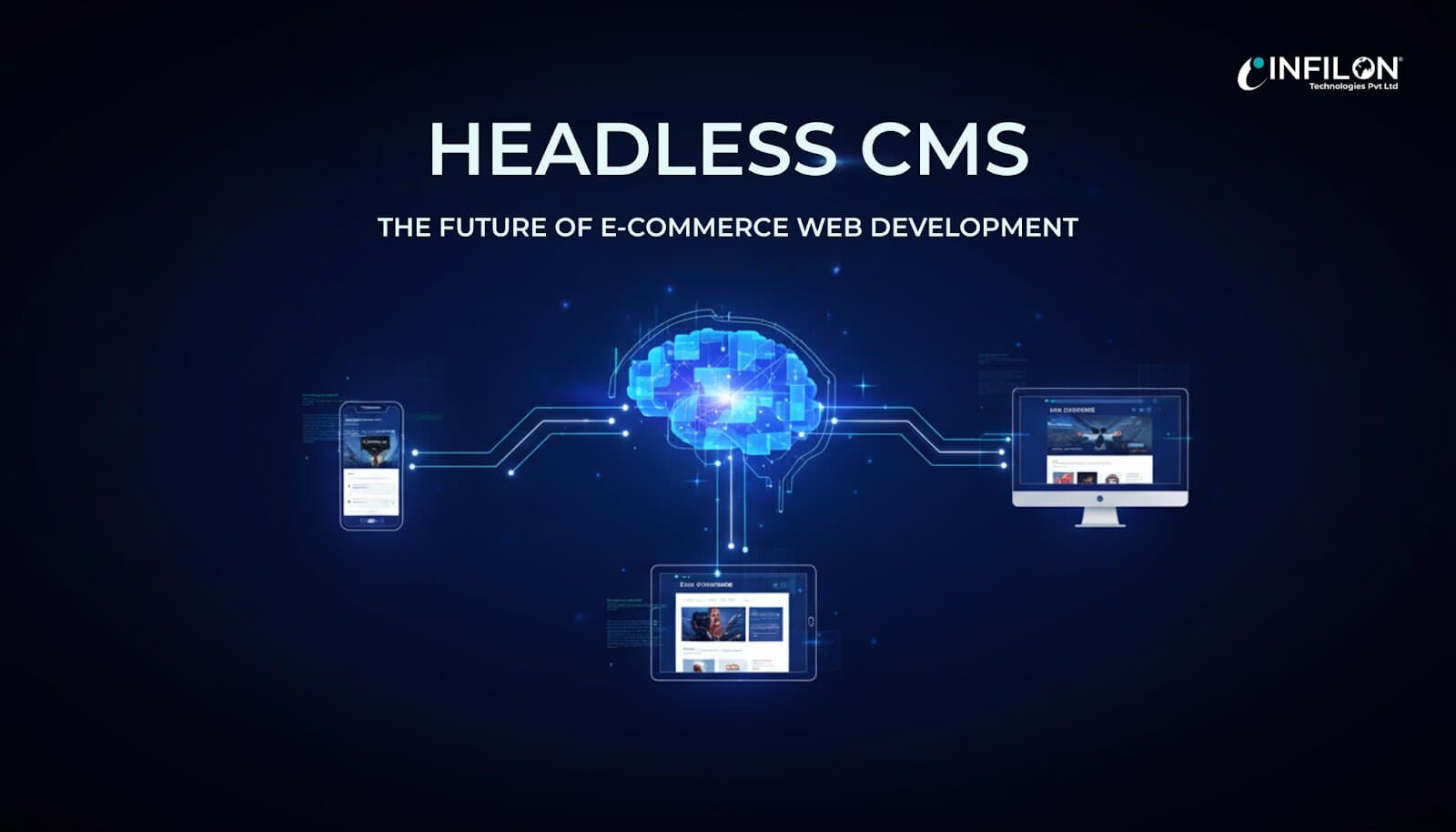
Headless CMS: The Future of E-commerce Web Development
2026-02-24•7 min read

Headless CMS: The Future of E-commerce Web Development

The digital commerce landscape is evolving rapidly. Customers expect seamless shopping experiences across websites, mobile apps, social platforms, and even IoT devices. Traditional content management systems (CMS) often struggle to meet these growing demands due to rigid architectures and limited flexibility. This is where Headless CMS emerges as a game-changer. By decoupling the frontend from the backend, headless architecture is transforming E-commerce Web Development and setting new standards for scalability, performance, and omnichannel delivery. In this article, we’ll explore why Headless CMS is considered the future of modern e-commerce platforms and how businesses can leverage it for sustainable growth. What is a Headless CMS? A Headless CMS is a content management system where the backend (content repository) is separated from the frontend (presentation layer). Instead of delivering content through predefined templates, it uses APIs to distribute content across multiple platforms. Unlike traditional CMS platforms where the content and presentation are tightly integrated, a headless architecture allows developers to build custom frontends using frameworks like React, Angular, or Vue while pulling content dynamically from the backend. This decoupled approach offers unparalleled flexibility in E-commerce Web Development, especially for brands targeting multiple digital channels. Why Traditional CMS is Falling Behind Traditional CMS platforms were designed primarily for website management. However, modern e-commerce requires: Omnichannel content delivery High-speed performance Personalized shopping experiences Seamless integrations with third-party tools Scalability during peak traffic Monolithic CMS architectures limit customization and scalability, making them less suitable for modern digital commerce strategies. How Headless CMS Powers Modern E-commerce Web Development 1. Omnichannel Content Delivery Today’s consumers interact with brands across websites, mobile apps, marketplaces, voice assistants, and social media platforms. A Headless CMS enables businesses to manage content centrally and distribute it via APIs to multiple channels. This ensures consistent branding and messaging while reducing content management complexity. 2. Enhanced Performance and Speed Page load speed directly impacts conversion rates in e-commerce. Headless architecture allows developers to use lightweight frontend frameworks, improving performance and delivering faster user experiences. For businesses investing in scalable Ecommerce Web Development, performance optimization becomes significantly easier with a decoupled architecture. 3. Greater Flexibility and Customization With traditional CMS platforms, developers are restricted by predefined themes and templates. Headless architecture provides complete freedom to design customized frontends tailored to brand identity and customer needs. This flexibility allows businesses to innovate quickly and experiment with new features without disrupting backend operations. 4. Improved Scalability As businesses grow, their digital infrastructure must scale efficiently. Headless CMS systems support microservices architecture, enabling seamless scalability during high-traffic events like holiday sales or product launches. Enterprises often collaborate with a trusted software development company in USA to implement scalable headless commerce solutions aligned with global standards. 5. Better Integration with Modern Technologies Headless CMS integrates smoothly with: Payment gateways CRM systems ERP software Marketing automation tools AI-driven recommendation engines This integration capability strengthens overall E-commerce Web Development strategies and ensures a unified digital ecosystem. Headless Commerce vs Traditional Commerce Feature Traditional CMS Headless CMS Architecture Monolithic Decoupled Flexibility Limited Highly customizable Omnichannel Support Restricted API-driven Scalability Moderate High Performance Template-dependent Optimized frontend The comparison clearly highlights why businesses are shifting toward headless commerce models. Key Benefits of Headless CMS for E-commerce Businesses 1. Faster Time-to-Market Developers can work independently on frontend and backend components, accelerating deployment cycles. 2. Personalized User Experiences Headless architecture makes it easier to integrate AI and personalization tools, enhancing customer engagement. 3. Future-Proof Technology As new platforms emerge, businesses can integrate them without restructuring the entire system. 4. Improved Developer Productivity Development teams can use modern frameworks and technologies, increasing efficiency and innovation. Industry Use Cases of Headless CMS Retail & Fashion Brands can deliver personalized product catalogs across mobile apps and web platforms. B2B E-commerce Complex pricing structures and product configurations become easier to manage. Subscription-Based Services Flexible content delivery enables dynamic subscription management and promotions. Companies offering professional Ecommerce development services increasingly recommend headless architecture to clients seeking long-term scalability. Challenges to Consider While Headless CMS offers numerous advantages, businesses should consider: Higher initial development complexity Need for experienced development teams API management and security considerations Partnering with experts ensures smooth implementation and ongoing optimization. The Role of E-commerce Development Services Implementing headless architecture requires strategic planning and technical expertise. Professional Ecommerce development services help businesses: Choose the right headless CMS platform Design scalable system architecture Integrate APIs and third-party tools Optimize frontend performance Maintain security and compliance Working with experienced development partners ensures the successful deployment of headless commerce solutions. The Future of E-commerce Web Development As customer expectations continue to rise, businesses must embrace technologies that support agility, speed, and innovation. Headless architecture enables brands to deliver seamless experiences across every digital touchpoint. In the coming years, we can expect: Greater AI integration Voice-commerce capabilities Real-time personalization Progressive Web Apps powered by headless CMS Increased adoption of composable commerce These advancements will further redefine the standards of modern E-commerce Web Development. Conclusion Headless CMS is not just a technological trend—it represents the future of scalable, high-performance digital commerce. By decoupling content from presentation, businesses gain the flexibility to innovate, personalize, and expand across multiple platforms. For companies seeking competitive advantage in today’s digital marketplace, adopting a Headless CMS strategy ensures faster performance, omnichannel readiness, and long-term scalability. With the right development expertise and strategic planning, headless architecture can transform your e-commerce ecosystem into a powerful, future-ready platform.

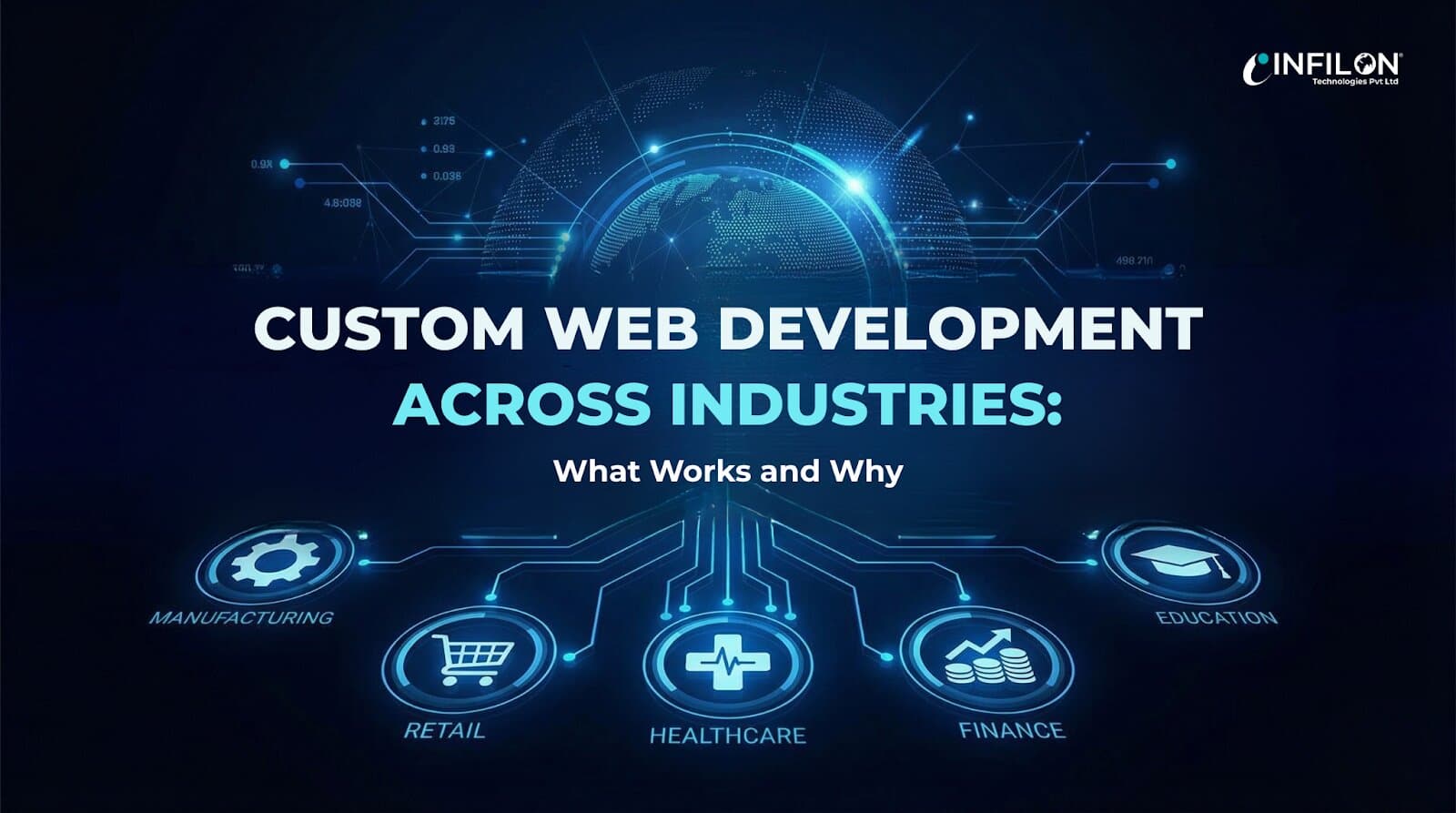
Custom Web Development Across Industries: What Works and Why
2026-02-20•7 min read

Custom Web Development Across Industries: What Works and Why

In today’s digital-first economy, businesses across industries are investing heavily in web solutions that go beyond templates and generic platforms. While ready-made solutions may offer quick deployment, they often fail to meet complex operational requirements. This is where Custom Web Development plays a transformative role. From healthcare and finance to eCommerce and manufacturing, tailored web solutions help businesses streamline workflows, improve user experience, and achieve scalable growth. In this article, we explore how custom web development works across industries, why it delivers better results, and what businesses should consider before investing. What Is Custom Web Development? Custom web development refers to the process of designing and building web applications or websites specifically tailored to a business’s unique needs. Unlike pre-built CMS or SaaS platforms, custom solutions are created from scratch or heavily customized to align with specific workflows, branding, security standards, and scalability requirements. Partnering with a professional Web development company ensures that businesses receive solutions built for performance, flexibility, and long-term sustainability. Why Businesses Across Industries Choose Custom Web Development Industry-Specific Requirements Every industry has its own operational complexities, compliance requirements, and customer expectations. Off-the-shelf platforms often lack the flexibility to accommodate these needs. With Custom Web Development, organizations can integrate specialized features such as: HIPAA-compliant portals for healthcare Secure transaction systems for fintech Inventory automation for retail Customer dashboards for SaaS platforms Tailored development ensures that the web solution aligns precisely with industry standards and business processes. Scalability for Long-Term Growth As businesses grow, their web infrastructure must adapt. Custom-built systems allow seamless scaling without performance bottlenecks. A reliable Web development company designs scalable architectures using modern frameworks, cloud technologies, and microservices, ensuring future readiness. Enhanced Security and Compliance Industries like healthcare, banking, and eCommerce require robust data protection mechanisms. Custom development enables businesses to implement advanced security protocols, encryption standards, and compliance frameworks tailored to regulatory demands. Many enterprises collaborate with a trusted software development company in USA to ensure high security standards and global compliance practices. Custom Web Development in Key Industries Healthcare Healthcare platforms require secure patient portals, appointment systems, and medical data management tools. Custom web solutions enable real-time access to medical records, secure telemedicine integration, and regulatory compliance. By leveraging tailored web development, healthcare providers enhance both operational efficiency and patient experience. eCommerce and Retail In the competitive retail landscape, customer experience determines success. Custom eCommerce platforms offer: Personalized product recommendations Advanced search functionality Seamless checkout processes Integrated CRM and ERP systems These features drive higher conversions and improve customer retention. Finance and FinTech Financial institutions demand high-level encryption, fraud detection systems, and real-time transaction processing. Custom-built platforms provide enhanced security layers and optimized user interfaces tailored for financial services. Manufacturing and Logistics Custom web applications help manufacturers manage supply chains, inventory tracking, and operational dashboards. Real-time data analytics and automation tools improve decision-making and reduce downtime. Education and E-Learning Educational institutions require dynamic learning management systems, interactive dashboards, and secure content delivery. Custom web solutions enable personalized learning experiences and seamless content management. Key Technologies Driving Custom Web Development Modern web solutions leverage cutting-edge technologies to ensure performance and reliability: Frontend frameworks like React, Angular, and Vue Backend technologies such as Node.js, Django, and .NET Cloud infrastructure and DevOps pipelines API-driven architectures and microservices Companies offering comprehensive software development services ensure these technologies are integrated effectively to deliver high-performing solutions. Benefits of Investing in Custom Web Development Unique Brand Identity Custom solutions allow businesses to design platforms aligned with their brand identity, improving user trust and engagement. Improved Performance Optimized coding and architecture ensure faster load times and seamless navigation. Competitive Advantage Tailored features give businesses an edge over competitors relying on generic solutions. Seamless Integration Custom platforms integrate smoothly with CRM, ERP, payment gateways, and third-party tools. What Makes Custom Web Development Successful? Successful custom development depends on: Clear business objectives Experienced technical teams Scalable architecture design Strong UI/UX strategy Ongoing maintenance and optimization Collaborating with an experienced Web development company ensures that projects are delivered efficiently, securely, and aligned with long-term business goals. Challenges to Consider While custom solutions offer numerous advantages, businesses must also plan for: Higher initial investment Longer development timelines Continuous updates and support However, the long-term ROI often outweighs the initial costs, particularly for enterprises seeking scalable, secure, and high-performance web platforms. The Future of Custom Web Development As digital transformation accelerates, web solutions are becoming more intelligent and adaptive. AI integration, progressive web apps (PWAs), cloud-native architectures, and headless CMS solutions are shaping the next generation of web platforms. Businesses that invest in Custom Web Development today position themselves for future innovation and sustainable growth. Conclusion Custom web development is no longer a luxury—it’s a strategic necessity for businesses aiming to stand out in competitive markets. Across healthcare, retail, finance, manufacturing, and education, tailored web solutions provide scalability, security, and performance advantages that generic platforms simply cannot match. By partnering with a trusted Web development company and leveraging advanced software development services, organizations can build powerful digital ecosystems tailored to their industry needs. For enterprises seeking global expertise and compliance-driven solutions, collaborating with a reputable software development company in USA ensures quality, security, and innovation. Investing in custom web development today means building a digital foundation that supports tomorrow’s growth.

How Generative AI is Revolutionizing ERP Software Development in 2026
2026-02-05•7 min read

How Generative AI is Revolutionizing ERP Software Development in 2026

Enterprise Resource Planning (ERP) systems have long been the backbone of business operations, helping organizations manage finance, supply chain, HR, manufacturing, and customer data from a unified platform. However, as businesses face increasing complexity and demand real-time intelligence, traditional ERP systems are no longer enough. In 2026, Generative AI is transforming ERP systems from static process tools into intelligent, predictive, and adaptive platforms. From automating workflows to enabling data-driven decision-making, generative AI is redefining how modern enterprises approach ERP software development. Understanding Generative AI in ERP Systems What Is Generative AI? Generative AI refers to advanced artificial intelligence models capable of creating new content, insights, and recommendations based on existing data. Unlike rule-based automation, generative AI can analyze patterns, generate predictions, and adapt dynamically to business scenarios. When integrated into ERP platforms, generative AI enables systems to learn from enterprise data, automate complex tasks, and provide actionable insights—making ERP systems smarter and more responsive. Why ERP Software Development Needs Generative AI in 2026 Businesses today operate in highly dynamic environments where data volumes are massive and decision cycles are short. Traditional ERP systems often struggle with manual configurations, delayed insights, and rigid workflows. Generative AI addresses these challenges by: Automating repetitive ERP processes Enhancing data analysis and forecasting Improving user experience through conversational interfaces Enabling real-time, predictive decision-making As a result, organizations are increasingly turning to intelligent ERP software development strategies that embed AI at the core. Key Ways Generative AI Is Transforming ERP Software Development Intelligent Process Automation Generative AI goes beyond basic automation by understanding context and optimizing workflows automatically. ERP systems can now handle tasks such as invoice processing, inventory updates, and procurement approvals with minimal human intervention. This intelligent automation reduces operational costs and improves accuracy, especially when implemented by an experienced ERP development company. Predictive Analytics and Smart Forecasting One of the most powerful applications of generative AI in ERP systems is predictive analytics. AI-driven ERP platforms can analyze historical and real-time data to forecast demand, optimize inventory, and predict financial trends. This capability enables organizations to move from reactive planning to proactive business strategies, giving them a competitive edge in fast-changing markets. Conversational ERP Interfaces In 2026, ERP systems are becoming more user-friendly through AI-powered conversational interfaces. Employees can interact with ERP platforms using natural language—asking questions like “What is the current inventory status?” or “Generate a sales forecast for Q3.” These AI assistants improve accessibility, reduce training time, and boost productivity across departments. Personalized ERP Experiences Generative AI allows ERP systems to tailor dashboards, reports, and workflows based on user roles and behavior. Finance teams, HR managers, and supply chain professionals each receive customized insights relevant to their responsibilities. This personalization enhances decision-making and user engagement, making ERP systems more intuitive and effective. Faster ERP Customization and Development Traditional ERP customization is often time-consuming and expensive. Generative AI accelerates development by: Automatically generating code snippets Suggesting optimized system configurations Identifying integration requirements Leading organizations now partner with a forward-thinking ERP development company to leverage AI-driven tools that significantly reduce development timelines and costs. Benefits of AI-Driven ERP Software Development Improved Operational Efficiency Generative AI streamlines processes, minimizes errors, and reduces manual workloads, allowing teams to focus on strategic initiatives. Data-Driven Decision Making AI-powered insights enable leaders to make faster, more informed decisions backed by real-time data. Scalability and Flexibility AI-enabled ERP systems adapt easily to business growth, new markets, and evolving customer demands. Enhanced User Adoption With intuitive interfaces and personalized experiences, employees are more likely to adopt and effectively use ERP platforms. Industry Use Cases of Generative AI in ERP Systems Manufacturing AI-driven ERP systems optimize production schedules, predict equipment failures, and manage supply chains more efficiently. Retail and E-commerce Generative AI enhances demand forecasting, inventory management, and personalized pricing strategies. Healthcare ERP platforms leverage AI to manage resources, streamline patient billing, and ensure regulatory compliance. Finance AI-enabled ERP systems automate reporting, detect anomalies, and improve financial planning accuracy. Choosing the Right ERP Development Partner Implementing generative AI into ERP systems requires deep technical expertise, industry knowledge, and a clear strategic roadmap. Businesses should collaborate with an experienced ERP development company that understands both enterprise systems and advanced AI technologies. A trusted partner offering comprehensive software development services can help design, develop, and deploy AI-powered ERP solutions tailored to your business needs. Many enterprises also prefer working with a reliable software development company in USA to ensure compliance, security, and global quality standards. Challenges and Considerations While generative AI brings immense value, businesses must address challenges such as: Data security and privacy AI model transparency Integration with legacy ERP systems Change management and user training With proper planning and expert guidance, these challenges can be effectively managed to unlock long-term value. The Future of ERP Software Development As we move deeper into 2026, ERP systems will evolve into autonomous business platforms capable of self-optimization and continuous learning. Generative AI will play a central role in this evolution, enabling ERP solutions that not only support business operations but actively drive growth and innovation. Organizations investing in intelligent ERP software development today will be better positioned to adapt, compete, and thrive in the digital economy. Conclusion Generative AI is fundamentally reshaping ERP systems, transforming them from traditional management tools into intelligent, predictive platforms. By automating processes, enhancing analytics, and personalizing user experiences, AI-powered ERP solutions are setting new standards for enterprise efficiency. To fully realize these benefits, businesses must partner with a skilled ERP development company and invest in advanced software development services that align technology with long-term business goals. In 2026 and beyond, generative AI-driven ERP software will not just support enterprises—it will redefine how they operate, decide, and grow.

Cross-Platform Mobile Development: React Native vs Flutter
2026-01-22•7 min read

Cross-Platform Mobile Development: React Native vs Flutter

The demand for mobile applications continues to grow as businesses aim to reach users across multiple platforms quickly and efficiently. Instead of building separate apps for iOS and Android, many organizations now prefer cross-platform mobile development, which allows them to create a single app that runs seamlessly on both platforms. Among the available frameworks, React Native and Flutter stand out as the most popular choices. But how do they differ, and which one is right for your business? In this blog, we’ll explore React Native vs Flutter in detail, comparing performance, development speed, UI capabilities, and scalability to help you make an informed decision. What Is Cross-Platform Mobile Development? Cross-platform mobile development refers to the process of building mobile applications that can run on multiple operating systems using a single codebase. This approach significantly reduces development time, cost, and maintenance efforts while ensuring a consistent user experience across devices. Businesses often turn to a professional mobile app development company to implement cross-platform solutions that balance performance, scalability, and speed to market. Understanding React Native What Is React Native? React Native is an open-source framework developed by Meta (Facebook) that enables developers to build mobile apps using JavaScript and React. It allows developers to reuse most of the code across platforms while still delivering a near-native experience. Key Features of React Native Uses JavaScript and React Reusable components for faster development Strong community support Access to native APIs through bridges React Native is widely used by startups and enterprises alike due to its flexibility and rapid development capabilities. Understanding Flutter What Is Flutter? Flutter is an open-source UI toolkit developed by Google that uses the Dart programming language. It allows developers to build visually rich and high-performance mobile applications with a single codebase. Key Features of Flutter Uses Dart language Built-in widgets for consistent UI High performance with compiled native code Strong support for custom animations and UI design Flutter is gaining popularity for its smooth UI rendering and ability to deliver pixel-perfect designs across platforms. React Native vs Flutter: Key Differences Performance Flutter often has an edge in performance because it compiles directly to native ARM code and doesn’t rely on a JavaScript bridge. React Native, while efficient, may experience performance bottlenecks in complex applications due to bridge communication. User Interface and Design Flutter provides a rich set of customizable widgets, allowing developers to create highly polished and visually consistent interfaces. React Native relies on native components, which can lead to slight UI differences between platforms. Development Speed React Native benefits from JavaScript’s widespread adoption and reusable libraries, making onboarding faster for many developers. Flutter’s hot reload feature also enhances productivity, but Dart may have a steeper learning curve for teams new to the language. Community and Ecosystem React Native has a larger and more mature community, offering extensive third-party libraries and plugins. Flutter’s ecosystem is growing rapidly, with strong backing from Google and frequent updates. Use Cases for React Native React Native is ideal for: Apps requiring faster development cycles Projects with existing JavaScript expertise Applications with frequent updates MVPs and startups aiming for quick market entry Many businesses collaborate with a trusted mobile app development company to leverage React Native for cost-effective and scalable solutions. Use Cases for Flutter Flutter works best for: Apps with complex UI and animations High-performance applications Projects requiring consistent UI across platforms Long-term scalable mobile products Flutter is particularly attractive for brands focusing on premium user experience and modern app design. Cost and Maintenance Considerations Both frameworks reduce development costs by enabling a single codebase. Maintenance is also simpler compared to native apps, as updates can be rolled out across platforms simultaneously. Choosing the right framework as part of professional app development services ensures long-term maintainability, security, and scalability. Security and Scalability Security is a critical factor in mobile development. Both React Native and Flutter support secure coding practices, encryption, and authentication mechanisms. However, implementing enterprise-grade security requires expertise and proper architecture planning. Partnering with a reliable software development company in USA ensures compliance with security standards and delivers scalable mobile solutions tailored to business needs. Which Framework Should You Choose? The choice between React Native and Flutter depends on several factors: Project requirements Team expertise Performance expectations UI complexity Time-to-market goals React Native is often preferred for rapid development and JavaScript-based teams, while Flutter excels in performance and UI consistency. A detailed assessment by an experienced development partner can help determine the best fit. The Role of Cross-Platform Development in Business Growth Adopting Cross-Platform Mobile Development enables businesses to launch apps faster, reduce costs, and reach a wider audience. It allows companies to stay competitive in an increasingly mobile-first digital landscape while ensuring consistent experiences across devices. Organizations that invest in expert app development services can leverage cross-platform frameworks to innovate faster and scale efficiently. Conclusion Both React Native and Flutter are powerful frameworks that enable businesses to build high-quality mobile applications efficiently. React Native offers flexibility, a vast ecosystem, and faster onboarding, while Flutter delivers superior performance and visually stunning interfaces. The right choice depends on your business goals, technical requirements, and long-term vision. By working with an experienced mobile app development company, businesses can harness the full potential of cross-platform development and deliver future-ready mobile applications. Whether you’re launching a startup app or scaling an enterprise solution, cross-platform mobile development with React Native or Flutter can be a game-changer for your digital strategy.

Web App vs Mobile App: What’s the Difference?
2026-01-09•7 min read

Web App vs Mobile App: What’s the Difference?

In today’s digital-first world, businesses often face a crucial decision when building software solutions: should you develop a web app or a mobile app? While both serve similar purposes—delivering functionality to users—their development approach, performance, cost, and user experience differ significantly. Understanding the difference between web apps and mobile apps is essential for choosing the right technology that aligns with your business goals, target audience, and long-term growth strategy. In this blog, we’ll break down the key differences and help you decide which option is best for your business. What Is a Web App? A web application is a software application that runs in a web browser. Users can access it through the internet without installing anything on their device. Popular examples include email platforms, online banking portals, and project management tools. Web apps are built using standard web technologies such as HTML, CSS, and JavaScript, and they work across multiple devices and operating systems. Key Characteristics of Web Apps Accessible via web browsers No installation required Platform-independent Easy to update and maintain SEO-friendly for discoverability Many businesses choose to work with a web development company to create scalable web applications that reach users across desktops, tablets, and mobile devices with a single codebase. What Is a Mobile App? A mobile application is a software application specifically designed to run on mobile devices such as smartphones and tablets. These apps are downloaded and installed from app stores like Google Play or the Apple App Store. Mobile apps are developed using platform-specific languages and frameworks such as Swift (iOS) and Kotlin (Android), or cross-platform tools like Flutter and React Native. Key Characteristics of Mobile Apps Installed directly on devices Optimized for mobile performance Access to device features (camera, GPS, sensors) Better offline capabilities Higher engagement through push notifications Businesses seeking immersive user experiences often partner with a mobile app development company to build high-performance applications tailored to specific platforms. Web App vs Mobile App: Key Differences 1. Platform Compatibility Web apps work across all platforms with a browser, making them highly accessible. Mobile apps are platform-specific and require separate development for iOS and Android unless cross-platform frameworks are used. 2. Performance Mobile apps generally offer better performance because they are built specifically for a device’s operating system. Web apps rely on browsers, which may limit speed and responsiveness. 3. User Experience Mobile apps provide a smoother and more interactive experience, especially for tasks requiring frequent use. Web apps focus on simplicity and accessibility, making them ideal for broader audiences. 4. Development Cost and Time Web apps are usually faster and more cost-effective to develop because a single application works across all platforms. Mobile apps require more time and resources due to platform-specific development. 5. Updates and Maintenance Web apps update instantly for all users. Mobile apps require users to download updates from app stores, which can delay feature rollouts. When to Choose a Web App Web apps are ideal when: You want to reach a wide audience quickly SEO and online visibility are important You need faster development and lower costs Your app is content-driven or transactional A reliable web development company can help you build responsive, secure, and scalable web applications that perform seamlessly across devices. When to Choose a Mobile App Mobile apps are the right choice when: Your users will interact with the app frequently You need access to device hardware features Offline functionality is critical Push notifications are essential for engagement An experienced mobile app development company ensures that your app delivers high performance, intuitive UI, and platform-specific optimization. Progressive Web Apps: A Hybrid Approach Progressive Web Apps (PWAs) combine the best of both worlds. They are web apps that behave like mobile apps, offering offline access, push notifications, and app-like performance. PWAs are gaining popularity as businesses look for cost-effective alternatives without compromising user experience. However, they may still have limitations compared to fully native mobile apps. Security Considerations Security is critical for both web and mobile apps: Web apps rely heavily on browser security and HTTPS encryption Mobile apps benefit from OS-level security features Partnering with a trusted software development company in USA ensures your application meets security standards, compliance requirements, and data protection regulations. Web App vs Mobile App: Which Is Right for Your Business? Choosing between a web app and a mobile app depends on several factors: Target audience behavior Budget and timeline Required features and integrations Long-term scalability goals Businesses offering app development services often help clients analyze these factors before recommending the best solution. In many cases, a phased approach—starting with a web app and later expanding to a mobile app—can deliver maximum ROI. Final Thoughts Both web apps and mobile apps have their own strengths and use cases. Web apps offer accessibility, speed, and cost efficiency, while mobile apps deliver superior performance and user engagement. The right choice isn’t about which option is better—it’s about which one aligns with your business objectives. Whether you’re launching a startup product or scaling an enterprise solution, working with the right development partner ensures success at every stage.

E-commerce Platform Development: From Startup to Enterprise Scale
2025-12-19•7 min read

E-commerce Platform Development: From Startup to Enterprise Scale

In the digital age, the journey of an e-commerce business is akin to a biological evolution. It often begins as a small, agile entity—a startup testing the waters with a novel product or unique value proposition. But as demand grows, so does complexity. What works for a store processing ten orders a day will crumble under the weight of ten thousand. Navigating this transition from a scrappy startup to a dominant enterprise requires more than just marketing muscle; it demands a robust, scalable technical foundation. The technology stack you choose, the architecture you design, and the partners you select will dictate your ability to scale. This guide explores the critical stages of e-commerce platform development and how to navigate the shift from inception to enterprise dominance. The Startup Phase For a startup, the primary goal is not perfection—it is validation. You need to prove that there is a market for your product without burning through your capital. In this stage, 'Minimum Viable Product' (MVP) is the mantra Speed to Market and Cost Efficiency Speed is your competitive advantage. Startups rarely have the luxury of spending six to twelve months building a custom platform from scratch. Instead, the focus should be on leveraging established platforms that offer robust features out of the box. This is where SaaS (Software as a Service) solutions shine. Platforms like Shopify or BigCommerce provide the infrastructure, hosting, and security needed to launch quickly. For many early-stage businesses, investing in professional Shopify development services is the smartest initial move. These services allow you to customize a theme, set up payment gateways, and launch a professional-looking store in weeks rather than months, ensuring you can start generating revenue and gathering customer feedback immediately. Essential Features for Launch Your MVP doesn't need AI-driven personalization or augmented reality, but it does need the non-negotiables: Mobile Responsiveness: With mobile commerce dominating, your site must look flawless on smartphones. Secure Payment Gateways: Trust is currency. Integration with recognized providers like Stripe, PayPal, or local leaders is essential. User-Friendly Navigation: If users can't find products in three clicks, they will leave. The Growth Stage Once you have validated your product and traffic starts to climb, you enter the growth stage. This is a precarious phase where your initial infrastructure might start showing cracks. Your focus now shifts from 'just getting it online' to optimization and stability. Improving User Experience and Performance As traffic volumes increase, site speed becomes critical. A one-second delay in page load time can lead to a 7% reduction in conversions. During the growth phase, development efforts should focus on optimizing code, compressing images, and perhaps implementing a Content Delivery Network (CDN) to serve global customers faster. User Experience (UX) audits become necessary to identify friction points in the checkout process that are causing cart abandonment. Integrating Third-Party Tools Growth brings operational complexity. You can no longer manage inventory in a spreadsheet or email marketing manually. You need to integrate your e-commerce platform with external systems like: CRM (Customer Relationship Management) to track customer interactions. ERP (Enterprise Resource Planning) to manage inventory and logistics. Marketing Automation tools for personalized email campaigns. Integrating these disparate systems requires technical expertise. This is the stage where partnering with a dedicated E-commerce development company becomes invaluable. A professional partner can build custom APIs and middleware to ensure your Shopify store talks seamlessly to your warehouse management system, automating workflows that previously slowed you down. The Enterprise Phase When you reach enterprise scale, you are dealing with high transaction volumes, international markets, and complex business logic. Off-the-shelf solutions often reach their limits here, requiring a shift toward more flexible, custom architectures. Headless Commerce and Microservices The hallmark of modern enterprise e-commerce is 'Headless Commerce.' This architecture separates the front-end (what the customer sees) from the back-end (the logic and database). Why go headless? It offers unparalleled flexibility. You can push content to a smartwatch, a mobile app, and a web kiosk from a single back-end. It allows for ultra-fast page loads and highly custom user interfaces that standard themes cannot support. This approach is standard practice in high-level software development in USA and other tech hubs, where agility and omnichannel experiences are paramount. Data-Driven Decision Making Enterprises run on data, not hunches. Your platform must support advanced analytics and perhaps even AI-driven features. This could include: Predictive Analytics: Forecasting inventory needs based on seasonal trends. Personalization Engines Using machine learning to show different homepages to different user segments. Dynamic Pricing Adjusting prices in real-time based on demand and competitor data. Challenges in Scaling an E-commerce Platform Scaling is never a straight line. As you move from startup to enterprise, you will face specific technical hurdles. Managing Technical Debt 'Move fast and break things' works for startups, but it leaves behind 'technical debt'—quick, messy code fixes that need to be cleaned up later. As you scale, this debt accumulates, making new features harder to add. An experienced Ecommerce development company will help you refactor code and modernize legacy systems, ensuring your platform remains stable and secure rather than becoming a fragile house of cards. Security and Compliance For an enterprise, a security breach is catastrophic. You are a bigger target for hackers. Compliance with regulations like GDPR (Europe), CCPA (California), and PCI-DSS (payments) becomes a complex legal and technical requirement. Security audits, penetration testing, and robust data encryption must be integral parts of your development lifecycle. Why Partnering with Experts Matters The journey from a garage startup to a global enterprise is too complex to navigate alone. While your in-house team focuses on business strategy and marketing, the heavy lifting of technical scaling often requires specialized external partners. Whether you are looking to upgrade your existing setup or migrate to a more robust architecture, engaging with experts in Shopify development services—particularly those with Shopify Plus (Enterprise) experience—can save you years of trial and error. They understand the nuances of high-traffic environments and can engineer solutions that grow with you. Conclusion Building an e-commerce platform is not a one-time project; it is a continuous process of evolution. The tools that serve you well as a startup will inevitably need to be replaced or significantly augmented as you reach enterprise scale. By anticipating these stages—starting lean, optimizing for growth, and eventually architecting for flexibility—you can build a digital commerce empire that stands the test of time.

What is AIOps? A Complete Beginner’s Guide
2025-12-04•7 min read

What is AIOps? A Complete Beginner’s Guide

As organizations embrace digital transformation, managing complex IT operations has become increasingly challenging. Traditional monitoring tools can no longer keep up with the massive amounts of data generated by cloud systems, networks, and applications. That’s where AIOps (Artificial Intelligence for IT Operations) comes in — a powerful approach that combines machine learning, big data, and automation to transform how businesses manage their IT environments.In this guide, we’ll explore what AIOps is, how it works, and why it’s revolutionizing the way enterprises handle IT operations worldwide.Understanding AIOpsWhat Does AIOps Mean?AIOps, short for Artificial Intelligence for IT Operations, refers to the use of artificial intelligence (AI) and machine learning (ML) to automate and enhance IT operations. It enables IT teams to detect anomalies, predict outages, and resolve issues faster by analyzing vast amounts of operational data in real-time.In simple terms, AIOps acts as the “brain” of modern IT infrastructure — observing, learning, and responding to events autonomously.The Core Pillars of AIOps Data Aggregation: Collecting data from multiple sources like logs, performance metrics, and application traces. Real-Time Analytics: Identifying patterns and anomalies using AI models. Automation: Triggering automated responses or alerts to resolve issues without manual intervention. Collaboration: Providing actionable insights to IT teams for faster decision-making. Why AIOps Matters in Today’s IT LandscapeAs enterprises scale their digital ecosystems, the complexity of managing multiple cloud environments, microservices, and distributed systems grows exponentiallyAIOps addresses this challenge by bringing intelligence into IT operations, allowing teams to: Predict and prevent outages before they occur Improve system performance Reduce manual workload Optimize resource utilization According to Gartner, by 2026, over 60% of enterprises will rely on AIOps platforms to automate IT processes and improve efficiencyHow AIOps Works1. Data Collection and IngestionAIOps platforms collect data from various tools and sources — including monitoring systems, network devices, applications, and user activity.2. Correlation and AnalysisUsing machine learning algorithms, AIOps identifies patterns, correlates events, and detects anomalies. It helps distinguish meaningful signals from noise, providing clarity amid the flood of alerts.3. Automation and ResponseOnce an anomaly is detected, AIOps can automatically trigger workflows — such as restarting a service, allocating resources, or notifying the right team. This leads to faster mean time to resolution (MTTR) and improved uptime.4. Continuous LearningAIOps systems continuously learn from data, refining predictions and responses over time. This self-learning capability makes them smarter and more efficient as the environment evolves.The Key Benefits of AIOps1. Proactive Incident ManagementAIOAIOps platforms can forecast potential issues before they impact performance. This proactive approach minimizes downtime and enhances system reliability.2. Enhanced IT ProductivityBy automating repetitive tasks, AIOps frees IT professionals to focus on strategic initiatives rather than firefighting operational issues.3. Improved Decision-MakingThrough data-driven insights, AIOps helps organizations make smarter decisions about capacity planning, resource allocation, and performance optimization.4. Reduced CostsAutomation and efficiency lead to lower operational expenses, helping businesses scale sustainably without increasing headcount.5. Better Customer ExperienceWith fewer outages and faster incident resolution, businesses deliver smoother, more reliable digital experiences to their users.AIOps vs Traditional IT OperationsAspectTraditional IT OperationsAIOpsData HandlingManual, rule-based monitoringAI-driven, real-time analyticsResponse TimeReactive, slowerPredictive, proactiveScalabilityLimited for large datasetsHandles vast data at scaleAutomationMinimal automationHigh automation using AI/MLInsightsFragmentedUnified and intelligentTraditional monitoring systems depend on predefined rules and manual intervention. AIOps, however, uses AI-driven automation to handle complexity at scale, ensuring that issues are resolved faster and more accurately.Real-World Use Cases of AIOps1. Cloud Infrastructure MonitoringEnterprises use AIOps to monitor multi-cloud environments and detect performance anomalies automatically.2. Predictive MaintenanceAIOps predicts hardware or software failures before they happen, reducing downtime and maintenance costs.3. CybersecurityBy detecting unusual patterns or unauthorized activities, AIOps enhances security posture and prevents potential breaches.4. Application Performance OptimizationAIOps tools analyze user behavior, traffic patterns, and system logs to maintain optimal app performance.5. IT Service Management (ITSM)Integrating AIOps with ITSM platforms like ServiceNow helps automate ticketing, prioritization, and resolution workflows.The Role of AI Development in AIOpsAIOps wouldn’t exist without advanced AI and machine learning frameworks. Building and fine-tuning AI-driven IT systems requires expertise in data science, automation, and software architecture.Partnering with a reliable AI development company ensures the deployment of intelligent AIOps systems tailored to your organization’s infrastructure. These experts leverage deep learning, natural language processing (NLP), and predictive analytics to create solutions that drive efficiency and innovation.Leading AI development companies are also helping enterprises integrate AIOps with other business functions like cybersecurity, cloud automation, and data management — making IT operations smarter and more adaptive.How Businesses Can Implement AIOpsStep 1: Define ObjectivesIdentify the IT challenges you want AIOps to address — such as downtime reduction, faster incident resolution, or resource optimization.Step 2: Choose the Right ToolsSelect an AIOps platform that integrates seamlessly with your existing IT environment. Popular options include Splunk, Dynatrace, Moogsoft and IBM Watson AIOps.Step 3: Partner with ExpertsCollaborate with an experienced AI development company that offers end-to-end AIOps implementation support. Their AI development services can help you design, deploy, and scale your AIOps architecture efficiently.Step 4: Monitor and EvolveContinuously evaluate system performance and refine AI models for improved accuracy and outcomes.AIOps in the Global MarketThe demand for AIOps is accelerating worldwide as organizations digitize operations and move toward autonomous IT management. Many companies in software development are leading this transformation by embedding AIOps capabilities into enterprise tools and cloud platforms.According to industry analysts, the global AIOps market is projected to surpass $25 billion by 2030, driven by the increasing adoption of AI automation in IT and DevOps.ConclusionAIOps is not just a technology trend — it’s the foundation of next-generation IT operations. By combining machine learning, big data, and automation, AIOps empowers organizations to move from reactive monitoring to proactive, intelligent management.Whether you’re a growing enterprise or a global brand, implementing AIOps can dramatically improve uptime, security, and operational efficiency.If you’re ready to revolutionize your IT ecosystem with intelligent automation, explore tailored AI services designed to make your infrastructure smarter, faster, and future-ready.

Transform Your Vision

Explore how our services can be integrated with your business.

Partner with Infilon's expert engineering team to develop custom AI models, high-performance web applications, mobile platforms, and enterprise solutions.